MD.ANWAR HUSSAIN
সহকারী শিক্ষক
২২ অক্টোবর, ২০২৬ ০৯:২৬ পূর্বাহ্ণ
সহকারী শিক্ষক
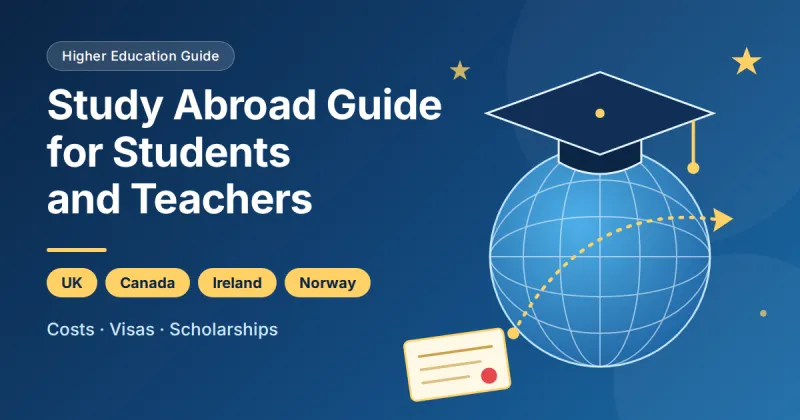
Studying abroad is a big decision, and many students turn to their teachers for advice before they apply. The first question is usually where to go. Costs, entry requirements, visa rules, and scholarship options vary from country to country. This guide covers the basics for four popular destinations, the UK, Canada, Ireland and Norway, so teachers and parents can help students choose with confidence. Each section links to a detailed guide from Global Education Care.
1. What to check before choosing a country
2. The United Kingdom
Many bachelor’s degrees in England, Wales and Northern Ireland take three years, and many master’s courses take one year. Applications usually need academic certificates, English-language evidence and a personal statement. Students from some countries, including Bangladesh, may also need a TB test certificate for courses longer than six months. For costs, requirements and visa steps, see Study in the UK from Bangladesh.
3. Canada
Canada requires careful preparation: admission requirements, costs, proof of funds and a study permit application. Rules change often, so students should always check the official government website for the latest information. For more details, see Study in Canada from Bangladesh.
4. Ireland
Ireland is an English-speaking destination that many students consider. Before applying, students should understand the IELTS requirements, the bank balance needed for the visa and the visa rules. For a full breakdown, see Study in Ireland from Bangladesh.
5. Norway
Norway used to be known for free tuition, but many students now have to pay tuition fees. That makes it important to check current fees, living costs, intakes and study permit steps before deciding. For more information, see Study in Norway from Bangladesh.
6. Scholarships
Scholarships can reduce the cost of studying abroad, but most do not cover everything. Fully funded scholarships are rare and competitive, and some are only for master’s or higher levels, not bachelor’s. Students should check eligibility and deadlines early, and can review country-wise scholarship options and requirements before applying.
7. Stay safe
Note: Prepare genuine, consistent financial documents early, because mismatched or unclear figures can delay a visa. For a practical overview, see Student Visa Financial Documentation Guidance.
8. How teachers can help
Final note: The right country depends on the student’s budget, course and goals. Careful planning and verified information help students avoid costly mistakes. For more guides on studying abroad, you can visit the Global Education Care.
Disclaimer and disclosure: This article is for general information only. Fees, visa rules and scholarship requirements change, so please verify the latest details on official websites before applying.




১
০ মন্তব্য