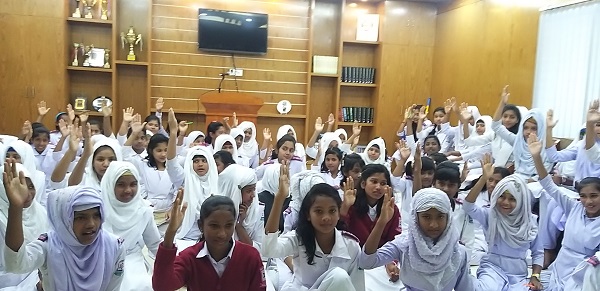
মোছাঃ লাকী আখতার পারভীন
সহকারী শিক্ষক

২২ মে, ২০২১ ০১:২২ পূর্বাহ্ণ
সহকারী শিক্ষক
During this period Westinghouse continued to pour funds and engineering resources into the goal of building a completely integrated AC system, obtaining the Sawyer–Man lamp by buying Consolidated Electric Light, developing components such as an induction meter,[16] and obtaining the rights to inventor Nikola Tesla's brushless AC induction motor along with patents for a new type of electric power distribution, polyphase alternating current.[17][18] The acquisition of a feasible AC motor gave Westinghouse a key patent for his system, but the financial strain of buying up patents and hiring the engineers needed to build it meant development of Tesla's motor had to be put on hold for a while.[19]
In 1890 Westinghouse's company was in trouble. The near collapse of Barings Bank in London triggered the financial panic of 1890, causing investors to call in their loans to W.E.[20] The sudden cash shortage forced the company to refinance its debts. The new lenders demanded that Westinghouse cut back on what looked like excessive spending on acquisition of other companies, research, and patents.[21][22]

In 1891 Westinghouse built a hydroelectric AC power plant, the Ames Hydroelectric Generating Plant near Ophir, Colorado. The plant supplied power to the Gold King Mine 3.5 miles away. This was the first successful demonstration of long-distance transmission of industrial-grade alternating current power and used two 100 hp Westinghouse alternators, one working as a generator producing 3000-volt, 133-Hertz, single-phase AC, and the other used as an AC motor.[23] At the beginning of 1893 Westinghouse engineer Benjamin Lamme had made great progress developing an efficient version of Tesla's induction motor and Westinghouse Electric started branding their complete polyphase AC system as the "Tesla Polyphase System", announcing Tesla's patents gave them patent priority over other AC systems and their intentions to sue patent infringers.[24]
In 1893, George Westinghouse won the bid to light the 1893 World's Columbian Exposition in Chicago with alternating current, slightly underbidding General Electric to get the contract.[25][26] This World's Fair devoted a building to electrical exhibits. It was a key event in the history of AC power, as Westinghouse demonstrated the safety, reliability, and efficiency of a fully integrated alternating current system to the American public.[27]

Westinghouse's demonstration that they could build a complete AC system at the Columbian Exposition was instrumental in them getting the contract for building a two-phase AC generating system, the Adams Power Plant, at Niagara Falls in 1895. At the same time, a contract to build the three-phase AC distribution system the project needed was awarded to General Electric.[28] The early to mid-1890s saw General Electric, backed by financier J. P. Morgan, involved in costly takeover attempts and patent battles with Westinghouse Electric. The competition was so costly a patent-sharing agreement was signed between the two companies in 1896.[29]