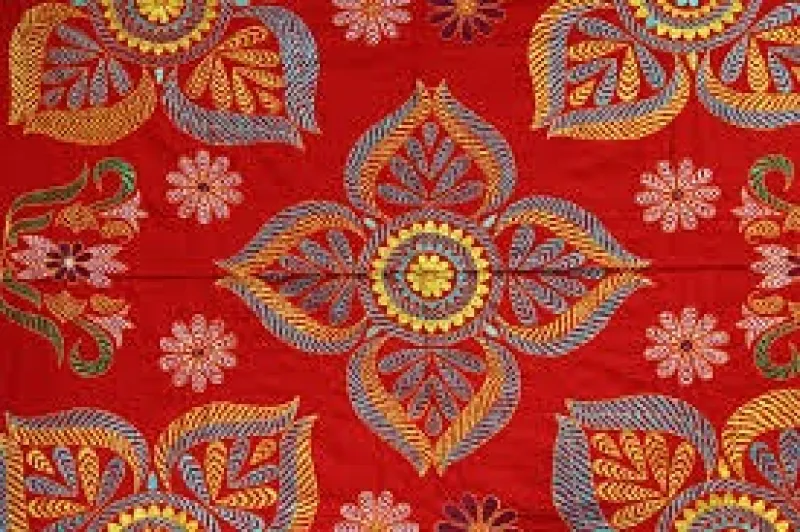
Nakshi Kantha is a type of traditional embroidered quilt made primarily in Bangladesh and the Indian states of West Bengal.
The term is derived from the Bengali word naksha, which means artistic patterns or designs.
Unlike ordinary kanthas used for warmth, these are decorative masterpieces created with intricate needlework.
Traditionally, they were made by layering old sarees or dhotis and stitching them together using a simple running stitch.
The craft is a centuries-old folk tradition, historically passed down from mothers to daughters in rural villages.
Each quilt often tells a story, featuring motifs like the lotus, sun, tree of life, or scenes from daily village life.
The embroidery reflects the inner emotions, dreams, and cultural identity of the women who sew them.
While they were originally made for personal use or gifts, they are now celebrated globally as high-end folk art.
It gained significant literary fame through Jasimuddin's famous 1929 poem, "Nakshi Kanthar Math" (The Field of the Embroidered Quilt).
Today, Nakshi Kantha remains a symbol of patience and creativity, turning discarded cloth into a canvas of heritage.