মোঃ শামসুদ্দোহা
সহকারী শিক্ষক

১৮ জুলাই, ২০২৪ ১১:১৫ পূর্বাহ্ণ
সহকারী শিক্ষক
ধরনঃ সাধারণ শিক্ষা
শ্রেণিঃ নবম
বিষয়ঃ English
অধ্যায়ঃ দ্বিতীয় অধ্যায়
Summary
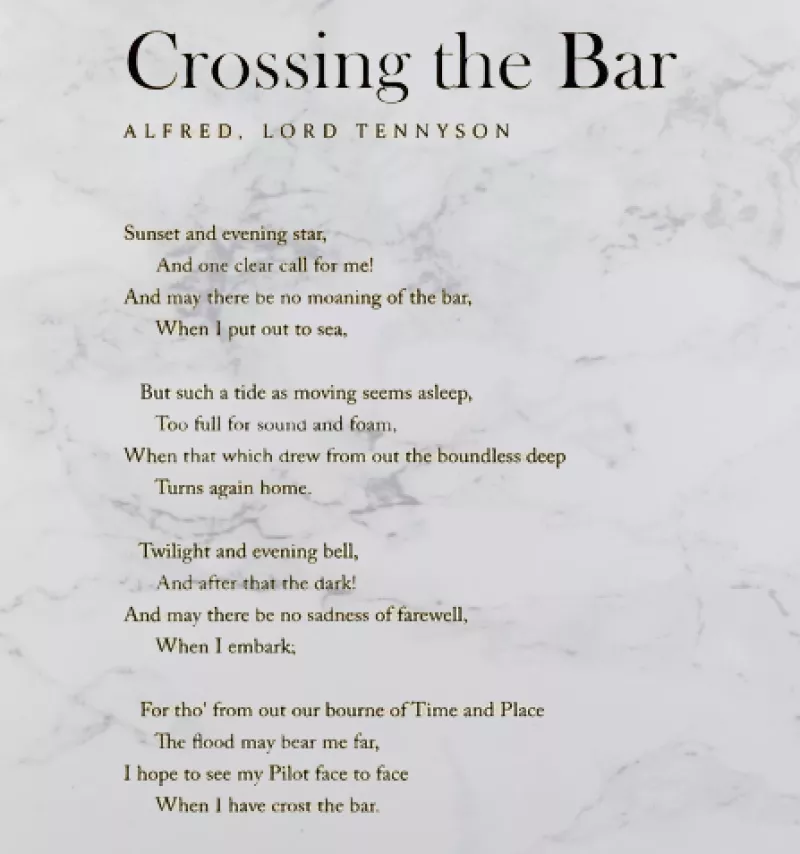
‘Crossing the Bar’ is about the journey into death from life and was written by Tennyson in his advancing years when he was starting to think about death.
The poem begins with the poet taking note of the setting sun and Venus. It feels to him in these moments as though he’s been called on. He also considers the sea and what will happen if he journeys there. He hopes it will refrain from sounding mournful and instead be full and unable to contain sound. The speaker is striving to find some peace in the scene.
Next, the speaker pronounces the day done and his departure looming. This is, of course, an extended metaphor for death itself. Despite his advancing doom, he doesn’t want anyone mourning or worrying about him. His mind is fixed on what he’s going to find when he’s crossed the sandbar. It is, ideally, his “Pilot,” meaning God.
Themes
Within ‘Crossing the Bar’ Tennyson explores several important themes. These include death, time, and the sea. The first is the most important and is prominently discussed and alluded to throughout the poem. From the first line to the last the speaker is preparing for a journey into the afterlife. Each element of the landscape has something to say about that journey, as does his desire to alleviate the sadness of any possible mourners. Time is another important element of the poem and is referenced directly and indirectly through descriptions of the setting sun.
Structure
‘Crossing the Bar’ is a four-stanza poem that’s divided into sets of four lines, known as quatrains. These quatrains follow a consistent rhyme scheme of ABAB. The lengths of the lines vary, but the first and third tend to be a bit longer than the second and fourth. In addition to influencing the rhythm of the poem, this gives the text an increased visual interest. It might also hint at the up-and-back motion of the ocean.
Poetic Techniques
Tennyson makes use of several poetic techniques in ‘Crossing the Bar’. These include alliteration, enjambment, and metaphor. The latter is the most important literary device used in the poem. A metaphor is a comparison between two, unlike things that do not use “like” or “as” is also present in the text. When using this technique, a poet is saying that one thing is another thing, they aren’t just similar. As the speaker describes the ocean, his prospective departure, and the journey he’s going to undertake, he is referring to death.
Alliteration occurs when words are used in succession, or at least appear close together, and begin with the same letter. For example, “clear and call” in line two of stanza one as well as “face to face” in stanza four.
Another important technique commonly used in poetry is enjambment. It occurs when a line is cut off before its natural stopping point. Enjambment forces a reader down to the next line, and the next, quickly. One must move forward to comfortably resolve a phrase or sentence. For example, the transition between lines three and four of the second stanza.
Form and Mood
‘Crossing the Bar’ is written in free verse in four stanzas which each contain four lines. It contains a strict ABAB rhyming pattern. Despite the gloomy subject matter, the mood is never dull or gloomy in its tone, perhaps the rhyming pattern was put in place to avoid this. It seems to view death almost as an adventure. The poem is presumably not autobiographical (It is nearly impossible to write a poem whilst dead!) but is told from a first-person perspective.